Table of Contents
- 1. Understanding Product-Led Growth in the B2B Context
- 2. Why PLG Can Be a Lead Engine
- 3. Core Principles for Turning PLG into Leads
- 4. PLG Funnel: From Free User to B2B Customer
- 5. The Role of Data in PLG Lead Engines
- 6. Aligning PLG with Sales and Marketing
- 7. Case Example: Slack’s PLG Model
- 8. Overcoming Common PLG Challenges
- 9. The Future of PLG-Driven B2B Lead Generation
- Conclusion
In the evolving landscape of B2B marketing, Product-Led Growth (PLG) has moved from a buzzword to a cornerstone of enterprise strategy. Instead of relying solely on outbound sales or traditional demand-generation campaigns, PLG allows the product itself to become the primary driver of user acquisition, conversion, and expansion.
Yet for many B2B organizations, the key challenge remains: how do you turn PLG into a sustainable B2B lead engine? While offering free trials, freemium models, or self-serve onboarding can attract users, converting them into qualified leads and long-term customers requires a structured strategy that combines product design, data insights, and go-to-market execution.
This article explores the principles, frameworks, and strategies for transforming PLG into a scalable lead-generation powerhouse without undermining the product experience.
1. Understanding Product-Led Growth in the B2B Context
At its core, Product-Led Growth is a business methodology where the product is the main vehicle for growth. Instead of long sales cycles dominated by demos and cold calls, prospects interact with the product directly, experience its value, and organically progress toward purchase.
In the B2B context, this translates to:
- Self-serve onboarding where prospects can set up and explore the product quickly.
- Value-first experiences where users recognize ROI before engaging sales.
- Data-driven signals that reveal which accounts are ready for conversion.
PLG doesn’t eliminate the role of sales and marketing. Instead, it reshapes their responsibilities around nurturing, supporting, and amplifying what the product already achieves.
2. Why PLG Can Be a Lead Engine
Traditional lead-generation models often create friction between marketing and sales. Marketing focuses on generating volume, while sales prioritize lead quality. PLG aligns these functions by placing user experience at the center of lead qualification.
When executed well, PLG:
- Expands top-of-funnel reach through free tiers and trials.
- Reduces acquisition costs as users discover value without heavy sales input.
- Improves lead quality since engaged product users naturally demonstrate buying intent.
- Drives expansion revenue as accounts scale usage over time.
This makes PLG uniquely suited to become a B2B lead engine — not just for startups, but for enterprises looking to modernize their go-to-market strategies.
3. Core Principles for Turning PLG into Leads
a. Design for Value Discovery
The first user interaction with your product is critical. Onboarding should be frictionless, highlighting key features that deliver immediate, visible outcomes. The faster users achieve value, the more likely they are to qualify as leads.
b. Instrument Product Analytics
Every click, action, and interaction within the product generates data. Tracking these signals — logins, feature adoption, collaboration usage — helps identify accounts with high intent.
c. Define the Product-Qualified Lead (PQL)
Unlike Marketing Qualified Leads (MQLs), PQLs are users who have experienced the product’s core value. For instance, a SaaS collaboration tool might define PQLs as accounts that create five projects and invite three teammates.
d. Bridge Product and Sales Teams
Sales must have visibility into product usage patterns. Integrating product analytics with CRM systems ensures that high-value users are quickly routed to sales outreach.
e. Automate Engagement
From in-app nudges to automated emails, engagement workflows should guide users from free exploration to paid adoption without overwhelming them.
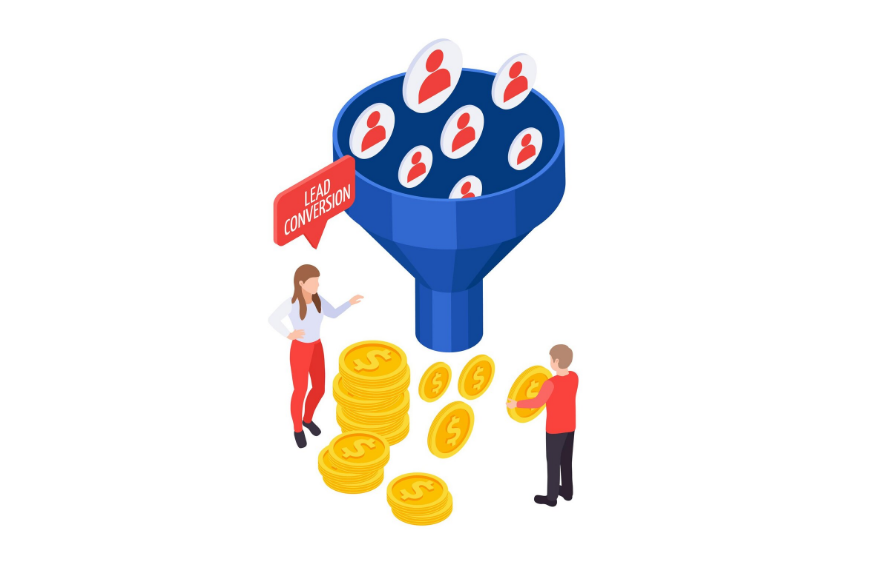
4. PLG Funnel: From Free User to B2B Customer
Turning PLG into a B2B lead engine requires rethinking the funnel:
Awareness Stage
- Users discover the product via organic search, community advocacy, or free tier promotions.
- Marketing focuses on content that highlights product use cases rather than abstract benefits.
Adoption Stage
- Self-serve onboarding ensures users reach activation quickly.
- In-app guidance, tutorials, and templates reduce time-to-value.
Conversion Stage
- Usage data triggers sales engagement when thresholds (PQL criteria) are met.
- Personalized outreach leverages insights into the features most used by the account.
Expansion Stage
- Land-and-expand strategies encourage additional licenses, advanced features, or enterprise packages.
- Success teams focus on long-term product stickiness.
The funnel is circular, not linear, as satisfied users become advocates who fuel additional adoption.

5. The Role of Data in PLG Lead Engines
The engine powering PLG is data visibility. Without it, sales teams cannot differentiate between casual users and high-intent buyers.
Critical metrics include:
- Activation rate: Percentage of users reaching the “aha moment.”
- Feature adoption rate: Which features drive the most consistent engagement.
- Expansion signals: Usage growth, collaboration spread, or API integrations.
- Conversion velocity: Time from sign-up to purchase decision.
Advanced organizations use predictive analytics to forecast which accounts are most likely to convert, enabling proactive sales engagement.
6. Aligning PLG with Sales and Marketing
A common misconception is that PLG eliminates the need for sales. In reality, it reshapes the role of sales toward consultative engagement. Instead of cold prospecting, sales teams focus on:
- Engaging PQLs with contextual insights.
- Offering tailored demos for enterprise accounts.
- Facilitating procurement processes that self-serve users cannot navigate alone.
Marketing, meanwhile, shifts its focus to:
- Building awareness through content marketing and community building.
- Supporting onboarding with educational resources.
- Running account-based campaigns triggered by product usage milestones.
7. Case Example: Slack’s PLG Model
Slack provides a clear illustration of PLG as a B2B lead engine. Users could initially sign up for free, explore core collaboration features, and invite teammates. As organizations grew dependent on the tool, sales stepped in to offer enterprise-grade packages with security, compliance, and advanced administration.
The free product generated viral adoption, while sales ensured that high-intent accounts converted into enterprise contracts. This dual approach transformed Slack into a billion-dollar business without halting its product-first ethos.
8. Overcoming Common PLG Challenges
While powerful, PLG as a lead engine introduces new hurdles:
- Data Silos: If product usage data doesn’t sync with CRM, opportunities are lost.
- Premature Outreach: Contacting users too early can feel intrusive.
- Complexity in Enterprise Sales: Large organizations still require procurement cycles and executive buy-in.
- Retention Risks: If onboarding doesn’t deliver value quickly, churn escalates.
To mitigate these risks, organizations must balance automation with human engagement, ensuring that leads feel supported rather than pressured.
9. The Future of PLG-Driven B2B Lead Generation
By 2025, PLG will no longer be a niche approach. Advances in AI-driven lead scoring, predictive analytics, and real-time product insights will make PLG the dominant lead engine for B2B enterprises.
- AI-enhanced PQLs will predict not just which accounts are ready but also when and how to engage them.
- Integrated ecosystems will unify product data, marketing automation, and sales CRM.
- Community-led growth will merge with PLG, where user advocacy drives both adoption and conversion.
Organizations that embrace this evolution will not only generate more leads but also build deeper, product-centered relationships with customers.
Conclusion
Turning Product-Led Growth into a B2B lead engine is less about replacing traditional methods and more about redefining them through the lens of product experience. The product becomes the first touchpoint, the qualification mechanism, and the conversion catalyst.
By designing for value discovery, defining PQLs, leveraging product analytics, and aligning sales and marketing around usage insights, enterprises can transform PLG from a growth experiment into a scalable, repeatable lead engine.
In this new era, the product is no longer just what you sell. It is how you sell.



Leave a Reply